Skip to content ↓

News & Articles

Page 15

  • Talking to Your Child About Their Disability

    Published 07/05/20, by Admin

    Why it is important to talk to your disabled child.

    Children with special needs are all very different.  We know this.  But every single parent reading this surely shares similar long-term goals for their child; they want their child to succeed.  This is true regardless of disability or not.  Success is defined differently for every child based on his or her strengths and needs, desires and dislikes.  Julie may wish to see her son grow up to be an autonomous, employed, and completely independent member of his community.  Peter may hope for his daughter to be receiving all the support services she needs to be able to live in a home with other people with similar needs while also being treated with dignity and respect.  In order to get there, parents have to fight hard and advocate for their child who can’t advocate for themselves.

    Or can they?

    Self-advocacy also looks different for every individual, and it also applies to every member of society regardless of ability or wellness status.  Helping your child become as strong an advocate for themselves as they can is part of the path on the journey to success.  Many parents don’t know where to begin to support these skills, and many carry legitimate concern for discussing disability with the child at all.

    As an adult with a disability who is also a professional in disability advocacy, I can tell you that avoiding the subject won’t make the feelings your child may feel go away.  Your child will experience some of what you fear, but they will be okay because you will have equipped them with a strong foundation of self-advocacy skills that will only build as they grow.  The late self-help author Susan Jeffers, Ph.D. used the motto “feel the fear and do it anyway.”  I try to use this in my everyday life, and I’ve been able to do much more than any doctor, therapist, or even my parents ever expected.  Have I reached “success” as my parents envisioned for me? No.  I think that over time, however, the definitionof success becomes taking ownership of your own journey.  This, to me, is self-advocacy.  And you, parents and caretakers, and siblings are the ones who help build that foundation.  But where can you start?

    One place to start is by talking with your child about their disability, and I will present several strategies of how to do just that.  Beginning the first steps, you need to think about where your child is at emotionally and cognitively, and of course, adapt what I offer here to be a conversation they can engage with.

    Reference the name and meaning of the disability or diagnosis.

    It’s important that the child is familiar not only with the fact that they utilize x form of assistive technology such as a wheelchair but also the reason they do.  Tell your child: “You have what is called [insert diagnosis].”  Using the medical diagnosis doesn’t have to be in support of labeling your child, but rather in being familiar with the vocabulary they will hear doctors and other providers use will help them be more able to engage as a valued member of their care team.  Also, give them a brief idea of what the diagnosis means.  For example, explain that spina bifida means that their spinal cord didn’t develop properly.  Depending on the child’s abilities, explain what some of the characteristics are and if there are various forms, explain them and point out which one they have.  Again, this doesn’t mean your family home will all of a sudden sound like a hospital wing, but just that your child will understand when they hear these terms.  They won’t be as easily left out of their own care.

    Don’t let the disability define the child; it is one of many aspects that make them who they are.

    Help your child think of as many different traits, skills, and characteristics they can about themselves.  This disability should be one of the traits listed. The goal here is to show that although it’s easy to see how these special needs can impact every aspect of our lives, they are only a tiny little bit of who we are.

    Discuss positive and negative encounters they may face due to their disability.

    Many children with visible disabilities find it difficult to fit in with their peers socially.  At times they will be teased, stared at, and asked questions that are no one’s business.  Use some family time to think of possible encounters and how your child can respond effectively.  You can even role play some of these scenarios.  Think about non-social encounters that may be tough as well such as handling scary medical procedures and the like.

    Foster positive thinking about the disability.

    While disability is seen as a negative thing for so many people, remember that we talked about how it is part of who your child is.  It is a lens through which they see the world.  It is part of the reason they think and emote as they do.  Without that disability, your child would perhaps have fewer struggles, but they would be a completely different person.  I encourage young self-advocates to make an active choice to have disability pride and to block out shame.  Of course, there are days where I curse arthrogryposis and throw myself a pity party, but most of the time, I see my disability as a positive part of who I am.  You couldn’t pay me to change it, and it has given me opportunities I likely never would have had if I didn’t stand out from the crowd in my bright green powerchair.  Help your child complete this phrase: “My disability makes {insert activity/skill] difficult, but it also makes me really good at {insert activity/skill].  Pride, not shame.

    Promote social interaction early on.

    Encourage new activities and experiences with their peers both with and without disabilities.  They shouldn’t be isolated and self-segregated with only those with disabilities, but they also need to have a few friends who can relate more directly to their experience of disability, people who “get it”.  Inclusion is key in most cases, be it social, community, or especially education.  This will provide great opportunities for your child to talk with and educate others about their disability, encouraging self-advocacy.  It also will help to end the social stigma associated with disability as we become a more inclusive society.

    Include siblings in the conversations.

    Siblings have so many feelings about disability that can be long-lasting, and they are often not dealt with.  In all the hubbub, sometimes siblings are forgotten.  Left unresolved, these feelings can become problematic throughout the life course.

    Ask and answer questions openly and honestly within your family.

    This is essential to building a strong support structure for all members of the family.  Disability and chronic illness can feel quite isolating, but a strong family support system will lessen that feeling.  The point is to remember that a family is a team that has each member’s best interests at heart.  Be there for each other and do so in love.


    Lauren Beller

    Disability professional, educator, presenter, activist, and self-advocate

    Philadelphia, Pennsylvania, USA
    Read More
  • What Your Child With Disabilities Doesn't Tell You...

    Published 07/05/20, by Admin

    Being a child living with disabilities can be incredibly tough. Whether the child was born with the disability or gets diagnosed as a child, it impacts the entire family. Believe it or not, children are really good at hiding things from their caregivers and loved ones. As someone that has lived through being diagnosed with multiple disabilities as a child, I can attest to being an expert at hiding some of my true thoughts and feelings from my loved ones. I was particularly guilty of this in my younger years, trying to navigate life as a kid and as a person with disabilities.  This is what I have found that children can hide from the people they love.

    Read More
  • Summer Holidays - 2017!

    Published 07/05/20, by Admin

    It’s that time of year again when everyone is getting ready for the Summer Holidays! As the same as previous years, we are very lucky to be offering lots of exciting trips, activities off site and some fantastic sessions in our purpose built Centre. We will be open to the community on a Wednesday all day and a Saturday 10am-1pm. The rest of the time our activities will be open to Children with additional needs, disabilities and life limiting conditions and their families.  Some of our sessions do require booking and the links to do so are below. If you have any questions please contact the centre on 01733 262226. We look forward to a summer of fun and lots of memory making with you all!

    Links to book onto our sessions:

    PARAATHLETICS/EUREKA/LEGOLAND-https://goo.gl/forms/IY29pHlnK3ozVX9K2
    VISIT FROM THE PARTY ANIMALS-https://goo.gl/forms/AuJRlJTVz5bEz77n2
    BUSHCRAFT-https://goo.gl/forms/bmD3fPbua2Gmf7B92
    BUILD A GRUFFALO HOUSE-https://goo.gl/forms/sB9t5ObS5GQjHRiG2
    RAFTED CANOES-https://goo.gl/forms/ccH9TqBhcGnwpEpa2
    POND DIPPING-https://goo.gl/forms/AgrZ3u5idsAhpOMX2
    MAGIC SHOW- https://goo.gl/forms/VbqUchSXqYM2r8FO2
    SWIMMING-https://goo.gl/forms/b2pw4WDjRKqufBpk2
    DEN BUILDING-
    WERE GOING ON A BEAR HUNT-https://goo.gl/forms/V9vPZfM7sDbcHQUF2
    SAILING-https://goo.gl/forms/0nqXtWWERbVHdKpB2
    SACREWELL FARM-https://goo.gl/forms/RhIlRUKoKoYG6Yb33
    ART WITH Brooke Morrishttps://goo.gl/forms/e2pPVkaQTbkJKdZQ2
    TRIP TO MABLETHORPE-https://goo.gl/forms/g4zjpg6PrEYs9YdC2

    Read More
  • Our Thoughts are With Charlie Guard...

    Published 07/05/20, by Admin

    I suspect most of you have heard about Charlie Gard. I know that as a family with a child with a complex medical condition that we have been following it closely, I have read the facts, and I have watched the heart wrenching YouTube videos from his parents, Chris Gard and Connie Yates. I am not religious but I have prayed for a miracle for the family and in his final hours I have hoped that there was a sudden change of plan and that the family could achieve a good death. A death which is dignified for Charlie and allows the family to say goodbye in a way which they want, a way in which will help them to be able to spend the time with their baby doing the things that most get to take for granted just as sleeping in his own cot, holding him in their arms and letting him know that he is loved and for afterwards to spend the time they need with him in the environment of their choosing.

    What ever your thoughts on if treatment should have been allowed to happen or not the whole situation is incredibly sad. As a parent I have fought when at the back of my mind there is the knowledge that this fight may not be in my child’s best interests and that I am being selfish in my continuing to fight, at a time when my child was in pain and on large levels of medication to manage his pain and in an induced coma as a result. I am one of the lucky ones our story had a happy ending and whilst Oliver has challenges he is a happy little boy who is no longer in pain. In hindsight I know that I made the right decisions but hindsight is a wonderful thing at the time it was gut wrenching and the most painful time of my life. I cannot imagine the pain of being given hope by a doctor and pinning all dreams for the future on that hope to be unable to give it a chance. When a child dies its not just the child that passes away but all of the parents hopes and dreams for the future for Charlie’s family ultimately they will be feeling that they didn’t manage to try everything possible.

    If we were in the situation where their was no hope left I can only pray that I would be strong enough to let him go but I know as his mum I would want to know that I have done everything in my power to try and Chris and Connie have worked so hard to do this.

    The situation is heart-breaking. For me however the bigger tragedy here is that the parents final wishes of being able to take him either home or to the hospice have also been denied when previously this was an option. It may be that we, the public do not know the details that have caused this change but to have that last little bit of control stripped away resonates with me as I am sure it will for many families as being one of our biggest fears.

    I also feel for the medical staff who have had to make this decision, who train and dedicate their lives to saving children to have to intervene and withdraw the support maintaining life cannot be easy but I am a firm believer that the family should be involved in all the decisions and from the parents view points this has not happened as they would of brought him home otherwise. Often parents feel helpless when their child is dying, the aim of palliative care is to give the child the best possible quality of life, sometimes it is essential for the child to remain in hospital for symptom control but to not allow Charlie to die at home with his family seems a particularly cruel twist of fate.

    Read More
  • May Holidays

    Published 07/05/20, by Admin

    Another half term has flown by, and as always it was great fun! Thank you to everyone who came to the events we ran over half term, it was jam packed fun for all involved!

    We started the week off with a trip to Barnwell country park! This park is located in Oundle and has many brilliant facilities such as a kids adventure playground, nature trail, bird watching hides, BBQ area etc. With the great amount of things to do, it was no suprise that our children and families had a wonderful time. Here are some images from the event:

    The next event was International Children’s Day which turned out to be a massive success! ICD is basically a event which focuses on drawing attention to child issues such as child welfare and pushed for the publication of children’s books with illustrations.  Thank you to all of the volunteers that came down to help us with this event, we couldn’t have done it without you!

    Onto Frog life now! Thank you for coming down and teaching the children all about wildlife and the enviroment. These guys were here last summer and we just had to have them back again this year!

    To finish the week off we had Morris dancing with Pig Dyke and Molly and country dancing to get into the spirit of May! here are some images from these events:

    Read More
  • Linden Homes Skydiving in 2017

    Published 07/05/20, by Admin

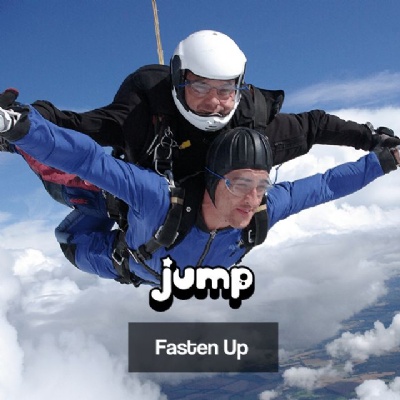
     On the 11th May 2017 Bianca, Sarah, Andy, Clare and Sam from Linden Homes raised an incredible £2,685 for Little Miracles by jumping 13,000 feet from a plane!

    If skydiving (or any other once-in-a-lifetime challenge) is on your bucket list and you would like to raise money to support our families please get in touch by emailing fundraising@littlemiraclescharity.org.uk.

    Read More
  • Easter Half Term

    Published 07/05/20, by Admin

    Thank you to everyone who came down to the events we ran over Easter half term, it was a thoroughly brilliant two weeks and the children loved it! We started the half term events off with swimming and then activity world! Here are some pictures from the event.

    One of the highlights of the whole 2 weeks was the fantastic DJ Day. At this event, the children learnt how to mix, play and record music with a variety of instruments and DJ equipment. They even made their own recordings to download! Nyces the graffiti artist also came down on this day, and we want to say a massive thank you to him! He was fantastic with the children and they made great artwork with him, as shown below.

    On the Wednesday, we took a trip to Rutland water where the families got involved in various activities such as mini golf, bugtopia, picnic, scooters and bikes. It was a fun filled day with lots of interesting activities. Thank you to everyone who came down!

    The centre was once again packed on the thursday for our Easter party, where there was dancing, party games and an easter egg hunt. There were 20 eggs hidden around the garden and the children had lots of fun trying to locate them. We also had fun playing all of the classic party games such as musical statues, sleeping lions, musical chairs etc.

    For the second week of half term, we ran a panto at the centre! Massive thank you to M & M productions for coming and presenting their show ‘Twist in Time’. Here are some pictures from the fantastic event. To round the half term off, we took a trip to Hunstanton Seaside where there was lots of sunbathing, eating of fish and chips, and sightseeing.


    Thank you again to everyone who made this Easter Half term a very special one once again!

    Read More
  • Artist Redesigns Autism Spectrum

    Published 07/05/20, by Admin

    I recently came across this article. It is from last year but i think it is still very important and current. It is about an artist named Rebecca Burgess who created a comic which redesigned the autism spectrum. It gets rid of the of the linear spectrum chart which basically states that: ‘you are autistic, you are not or you’re in between’.

    Rebecca wanted to smash the stereotype and basically show the consequences of stereotyping in a creative way. She says: “I want people to understand that autistic people don’t all fit a stereotype, and show people the consequences of stereotyping,” Burgess, from the U.K., told The Mighty in an email. “[Stereotyping leads to] underestimating the skills of autistic people or not believing someone [who is on the spectrum].”

    Read the full article here: https://themighty.com/2016/05/rebecca-burgess-comic-redesigns-the-autism-spectrum/

    Read More
  • Thank You to Kevin Bayliss!

    Published 07/05/20, by Admin

    We just want to express our gratitude to Kevin Bayliss braving the elements and raising £784 for Little Miracles. He achieved this by running the Silverstone half marathon. He completed the event in 2 hours, 11 minutes and 33 seconds which is a fantastic achievement!


    Thank you Kevin!


    Also, thank you to anyone who raises money for us in general. We are always extremely grateful to anyone who helps and supports us. If you want to get involved, volunteer or fundraise click this link:


    http://www.littlemiraclescharity.org.uk/get-involved/

    Read More
  • VOTE for Little Miracles!

    Published 07/05/20, by Admin

    VOTE HERE!

    https://www.thepeoplesprojects.org.uk/projects/view/sensory-equipment-for-little-miracles-ramsey

    Vote closes 3rd April!

    Little Miracles Ramsey supports families that have children with additional needs, disabilities and life limiting conditions. This project will see the creation of a multi-sensory studio which is specifically designed environment that will enable people who attend Little Miracles to enjoy a very wide range of sensory experiences for learning, stimulation, therapy, relaxation and fun.

    Whilst Little Miracles supports families with disabled children this project goes much wider than this. The group is based in a rural location where families struggle to get to the larger cities and there is no other public access sensory room currently in the local authority. We are in the same building as a local school, and where children’s services provide support to families. However, in the times that we are not using the room we will be able to offer it to the wider community so that even more people will be able to benefit.

    Many children with disabilities but specifically those with Autistic Spectrum Disorder also experience sensory sensitivities and we can work with the families to target specific difficulties to reduce sensory overload. For the family this will mean the opportunity to understand their child’s needs better, and for the child it will mean reduced meltdowns, improved behaviour and increased learning opportunities.

    Read More
  • The Social Model of Disability

    Published 07/05/20, by Admin

    What is social model of disability?

    You may have heard the term ‘social model of disability’ before, but what does it mean in regard to disability?

    The social model of disability basically says that disability is caused by the way society is organised as opposed to the person’s impairment. Attitudes found in society based on prejudice, stereotype also disable people from having equal opportunities in society.

    The medical model of disability:

    The medical model of disability is basically the opposite. It states that people are disabled by their impairments or differences. It looks at what is wrong with the person and not what the person actually needs to support them. Under this model, it is believed that the person with the disability should be changed or fixed by medical procedures. Even if the disability causes no pain or any kind of illness.

    Here is an example of the social and medical model in practice:

    A teenager with a learning disability wants to live independently but is unsure how to pay the rent. Under the social model of disability, this person would be supported to live in their own home and pay the rent. The medical model would expect people to live in a communal home.

    The social model and medical model are essentially two conflicting arguments. The social model was created by people with disabilities. The medical model says:

    • Your disability needs curing
    • You need professionals to look after to you
    • You are the problem
    • You can never be as equal as a non disabled person

    The social model in contrast recognises barriers and negative attitudes and any exclusion from society, whether that is intentional or not.

    There is a video by the charity Scope which helps explain the subject: https://youtu.be/0e24rfTZ2CQ

    Read More
  • FASD

    Published 07/05/20, by Admin

    Fetal alcohol spectrum disorder is a lifelong condition. Someone with FASD can sometimes find it difficult to make friends. This means it is important to build a safe social life for them, for example arranging activities for them that are non competitive. If possible, it is best for them to be in an environment where there are other people who understand, and are more accepting of those with learning disabilities. Building a network of people that the child or adult can turn to will be very beneficial.

    Characteristics of FASD can vary at different ages. Toddlers may have hyperactivity, poor memory, lack of fear and no sense of boundaries. During the primary school years, children may be easily distracted with short attention spans and have difficulty with motor skills. Older children can have low self esteem because they may think they’re different. Finally, teenagers can have poor impulse control and be unable to distinguish public and private behaviours.

    Children with FASD can have developmental delays. As an example, children with FASD can exhibit the social behaviour of a 7 or 9 year old. FASD children can become isolated as they often do not maintain relationships with peers. An early diagnosis is essential is key as it allows for early intervention. This means there is the opportunity for the appropriate and support.

    Read More