Why Accurate Information Matters
Following a social media post about Down syndrome that has been viewed by millions this week, our CEO,, Michelle King, wanted to share some thoughts about informed choice, balanced information and why the language we use matters.
I've been thinking a lot about the discussions taking place following a widely shared post about a family choosing to terminate a pregnancy after a diagnosis of Down syndrome.
Before I say anything else, I want to be clear that I support every family's right to make the decision that is right for them. These are deeply personal decisions made during some of the most difficult moments a person can face, and I have no interest in judging anyone for the choice they make.
What I do want to talk about is information.
The post has now been viewed by millions of people. Because of that reach, I think it is important that we talk about the language used and the picture of Down syndrome that has been presented.
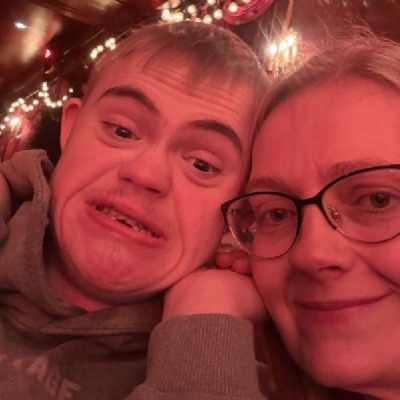
Nineteen years ago, whilst pregnant with my son Oliver, I was advised by two doctors to terminate my pregnancy at 35 weeks pregnant. I was told that he would never walk, never talk, never eat or breathe independently and that he would have a short and painful life.
Oliver has Down syndrome along with other related conditions.
Today, he is 19 years old.
Has he faced challenges? Absolutely. Have we as a family? More than I can list. Anyone who says raising a child with a disability is easy is not being honest.
But the predictions made about his future were wrong, he leads a good life and our families life is better for having him in it.
I hear of families told their child has Down Syndrome regularly. The first thing I always ensure that I do is congratulate them as ultimately so much of the language used will have been negative and not always fair.
Families deserve facts, not assumptions. They deserve balanced, accurate and up-to-date information. They deserve to understand both the challenges and the possibilities. They deserve access to support from professionals, charities and families who are living this reality every day.
Reading the post, what saddened me most was not the decision that was made. It was the description of Down syndrome itself.
When Down syndrome is presented primarily as a list of medical complications, limitations and things that can go wrong, we lose sight of the fact that we are talking about people. People with personalities, relationships, dreams, humour, determination and value that cannot be measured by a diagnosis.
There is another aspect of this conversation that I think is important.
People with Down syndrome are reading these posts too.
My son is aware of how people perceive him. He notices when assumptions are made about his abilities, his future and his value. Like all of us, he wants to be accepted, respected and seen for who he is.
When public figures describe Down syndrome primarily as a burden, a tragedy or a collection of limitations, those words do not exist in a vacuum. They are read by children, teenagers and adults with Down syndrome who are trying to understand how the world sees them.
That is why language matters.
Yes, some people with Down syndrome have significant medical needs. Some require lifelong support. Those realities should never be minimised.
But neither should their lives.
My son is not a “glitch” and nothing about him is “objectively shitty” and terminating his life would not have been “beneficial for our family.”
No professional can fully predict who a child will become, what they will achieve, or the impact they will have on the people around them. No one knows what the future holds and babies born healthy can still be affected by medical conditions and disabilities.
In the UK, around 90% of pregnancies diagnosed prenatally with Down syndrome end in termination. That is precisely why the information families receive matters so much. When people are making life-changing decisions, they need information that is current, balanced and evidence-based.
My concern is not that families have choices.
My concern is that every family deserves the opportunity to make that choice based on accurate information and genuine support. Whatever decision a family ultimately makes, it should be an informed one.
People with Down syndrome deserve to be seen as whole people, not a collection of statistics or medical conditions. Their lives have value, my sons life has value. their voices matter, and the information we share about them should reflect that reality. The only person who has the right to say if Oliver has a good life is Oliver and to a lesser extent those who love and support him - and he does!
Because at the heart of this conversation are real people like Oliver, and thousands of others, whose worth cannot and should not be measured by a diagnosis.